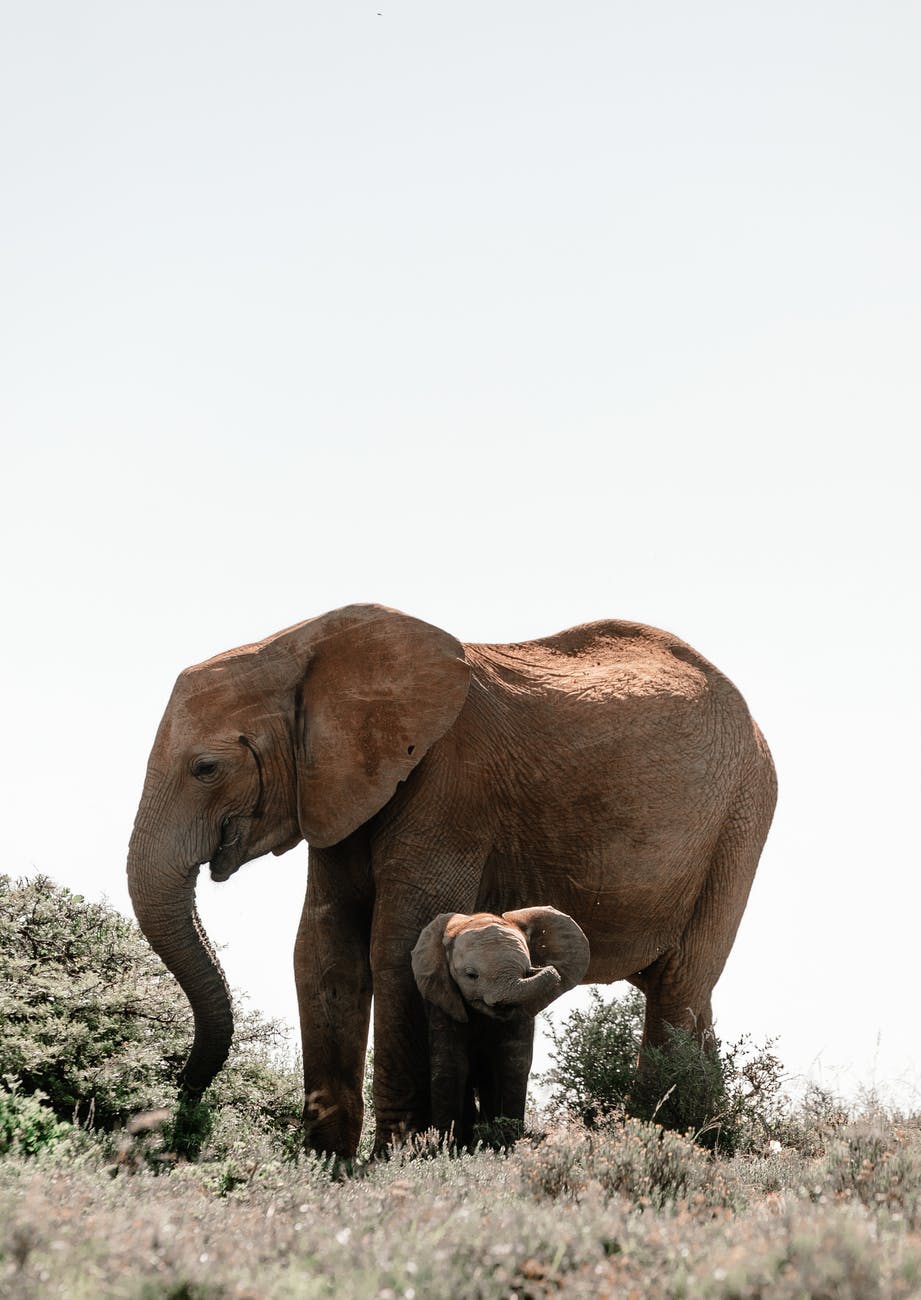

Would you ever think of bees teaming up to prevent elephant extinction by lending a hand to farmers? It sounds outrageous, but not for the mighty bee.
Elephants, an endangered underrated species, saw their populations decrease while poaching increased in popularity during the 70s and 80s.
The Ivory Trade ban was established in the 1990s, and although effective in restoring the high numbers of the elephant population, it has also created a conflict between humans and farmers.
The elephants are now roaming into the human world and their habitats. Because of this, there is a high death rate of incidental human-elephant conflict. This mainly revolves around Eastern and Southern Africa and Asia. With the rapid shrinking and fragmentation of their habitats and travel corridors, elephants are increasingly being forced out of the forest in search of food. Since habitat and travel destinations are limited, elephants are raiding farmers’ crops and breaking out of their boundaries. The farmer’s attempt to scare the elephants away using tactics of shooting firecrackers, shooting bullets (in the air), throwing stones, or, most surprisingly, explosives-filled pineapple. During the years 2014- 2019, 2,361 humans were killed.
Elephants are not carnivores, so they do not attack for food, only self-defense. The elephants act in confrontation and anger, attacking the farmers. Nevertheless, the farmers attack the elephants. For example, 510 elephants were killed by electrocution, poaching, poisonous substances from these angry farmers. Many advocates, such as Prachi Mehta, research director at the Wildlife Research and Conservation Society, and Dr. Lucy King are now relying on Earth’s most crucial tool, the honey bees, to solve this conflict.

As enormous and intimidating as they are, elephants fear bees. Dr. Lucy King concluded a study on this for African elephants in 2006. The results conclude that Asian Elephants have mainly developed this fear, opening up more opportunities for solutions in places like Nepal and Sri Lanka. The fear is due to the fact of their sensitivity in the soft, plushy areas of their eyes, trunk, and mouth, which will not only make them startled from the sound of a swarm but bothered and frightened. Their tiny enemy, although, will help them survive.
The Elephant and Bees Project (also Save the Elephants) has successfully protected these elephants for over 10 years, as Lucy King proposed the idea of beehive fences. The central concept of the fence is that it is a beehive connected to a tripwire, then placed in a specific area where farmers would like to protect. The hives are located 10 meters apart; therefore, when an elephant is in the area and confronts the tripwire, the hive will be ready to attack the intruder. In time, the elephant becomes aware that the bees are in that area, hopefully not leaving the boundaries.
Beehives are hung every ten meters and linked together in a specific formation. If an elephant gets near the site, the beehives will swing along the fence line and release the bees.
The costs of the beehives are affordably cheap, adaptable towards many climates, with local supplies, and the beehives are easily manageable for farmers. Not only does this provide pollination for many plants and crops in the farm areas, a thriving ecosystem, an income for these struggling farmers, and products such as local honey for consumption, but it also impacts and revolutionizes change in these communities working together to provide for a better planet.
The bee design sites in Kenya have over an 80% success rate, and the initiative is not stopping yet.
Advocate Prachi Metha also is experiencing the same human-elephant conflict in the district of Karnataka state in south India. He has tried out the fences in response to the 700 farmers asking for help. According to Metha, elephants prefer to raid at night when the farms are unguarded. The human presence is the most effective at keeping the elephants out, but many cannot afford the loss of time. The beehives are the most sustainable solution yet.
Since then, more than 367 farmers in the South India area have installed beehive fences. Upon placing the beehives in this district, many were concerned that the effectiveness of the beehives would vary for the Asian elephants. The WRCS’s program officer, Ravi Yellapur, has no concern about this method. Since he joined the project in 2015, there weren’t any instances of elephants escaping, nor any negative cons yet.
Thanks to the bees, thousands of humans, plants, and species are alive and thriving again. What is more held in their potential?
Learn More:
Elephants and Bees – Save the Elephants
Elephants and Bees and Me | Wildlife Conservation Network (wildnet.org)
 Bee The Change