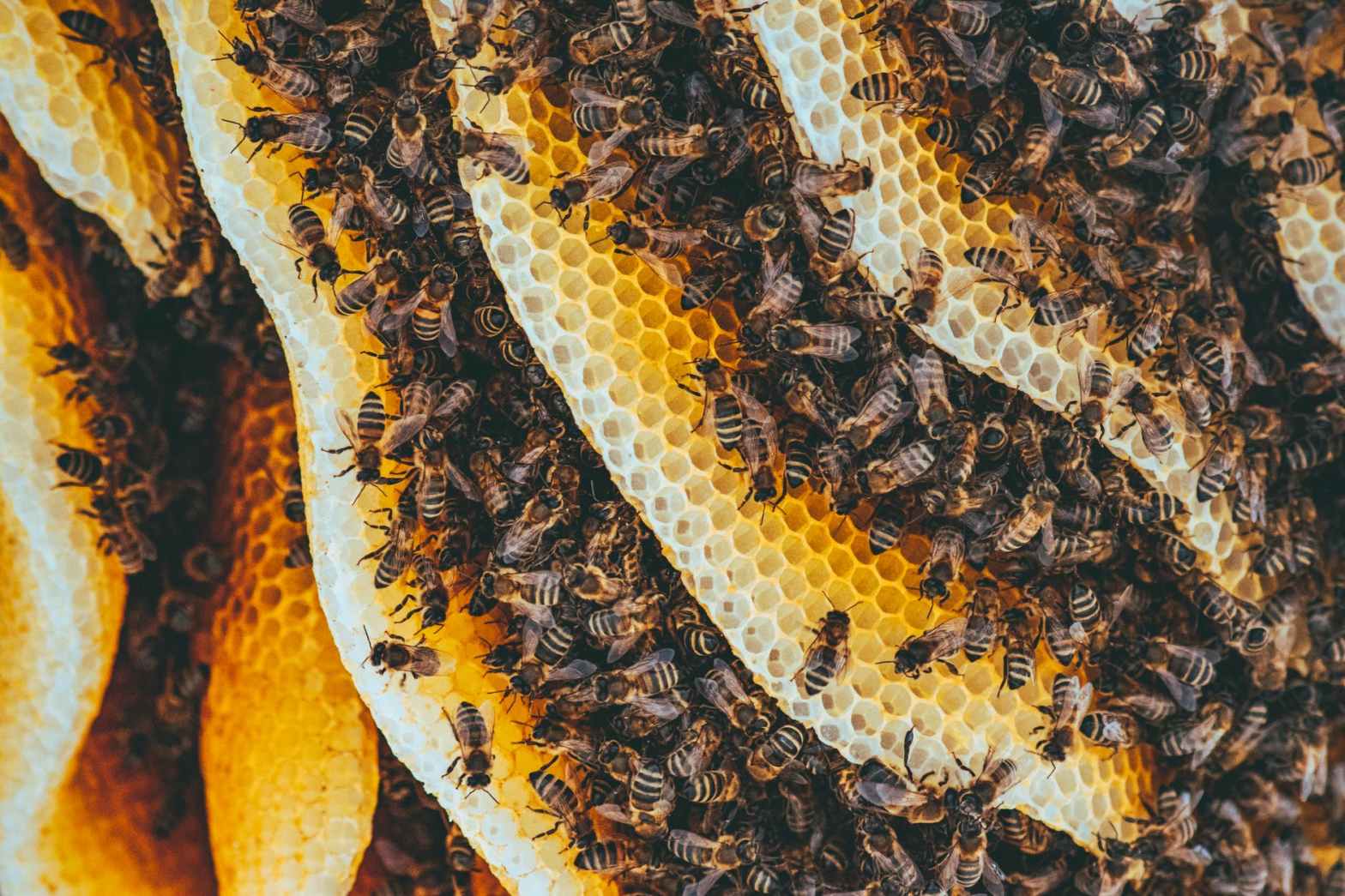
You may spot a honeybee in your backyard, on a flower. Collecting nectar. Swarming. Or even at the park. A honeybee can be found all over the world – except Antarctica. Wherever a flower grows, any bee or pollinator will be prospering in that area. The Western honeybee, the European honeybee, and Apis Mellifera are all names for the only insects producing food from humans. There are more than 20,000 species of bees, furthermore 2 trillion honeybees worldwide.
Honeybees come from the Apidae family, and they are eusocial flying insects, unlike their cousin the wasp, a solitary insect. Social insects are any insect specimen that lives in colonies and either works together, contains a division of labor within their hive, and/or manifests in an overlapping generation.
Honeybees are a highly complex and advanced insect dating from approximately 130 million years ago during the Cretaceous period, descending from predatory wasps. Honeybees are native to Eurasia, hence the European name honeybee.
However, it is claimed that they originated from eastern tropical Africa. From there, the honeybee migrated to Europe and Asia. The earliest record of a honeybee dated back 100 million years old and was founded in Southeast Asia, precisely Myanmar. It was fossilized in ember. Until about 80 million years ago, most honeybees evolved from the solitary lifestyle into a social lifestyle.
The honeybee caste system consists of three groups, the queen, the drones, and the worker bees. Around 50,000 bees live in one colony. The queen is the only reproductive female in the hive, and her typical life ranges from 3-8 years. Her whole life is based on laying eggs and providing worker bees to support the colony. The drones are the male bees. Nonetheless, they don’t do much but mate with virgin queens and steal foraged food. Lastly, the worker bees are all non-reproductive females who we refer to flying in our backyard, collecting nectar, and making our honey. They do all the work in the hive, such as nurturing larvae, guarding against predators, and foraging food. Worker bees fly up to 6 miles and sometimes as fast as 15 miles per hour. The tremendous work and stress the worker bees face result in a 4-8 weeks short lifespan.
A honeybee’s antonym consists of 3 sections: the abdomen, head, and thorax. They also have three pairs of legs or 6 legs connected to their thorax. Unlike most insects, they have two stomachs, one for digestion, and the other is called the honey stomach that stores nectar from flowers storing it until they reach the hive.
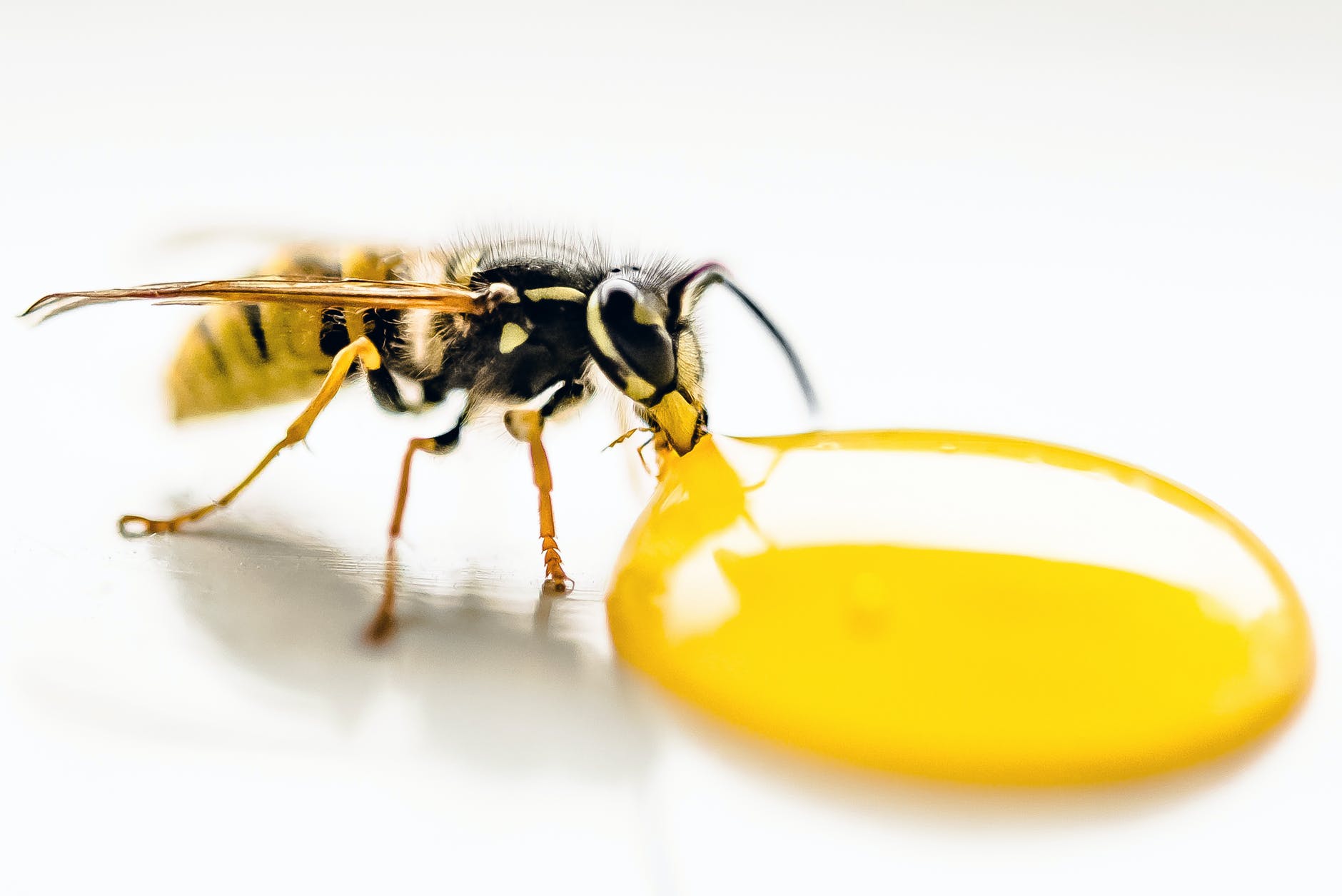
Bees although support their colony, also support our environment and our needs. We don’t just get honey from bees, but every 1 out of 3 bites of food we eat, or 1/3 of food on our plate is thanks to honeybees. Flowers worldwide prosper, a rainbow of colors to our plates, and smiles on our faces is the promise of the mighty honeybee.
 Bee The Change