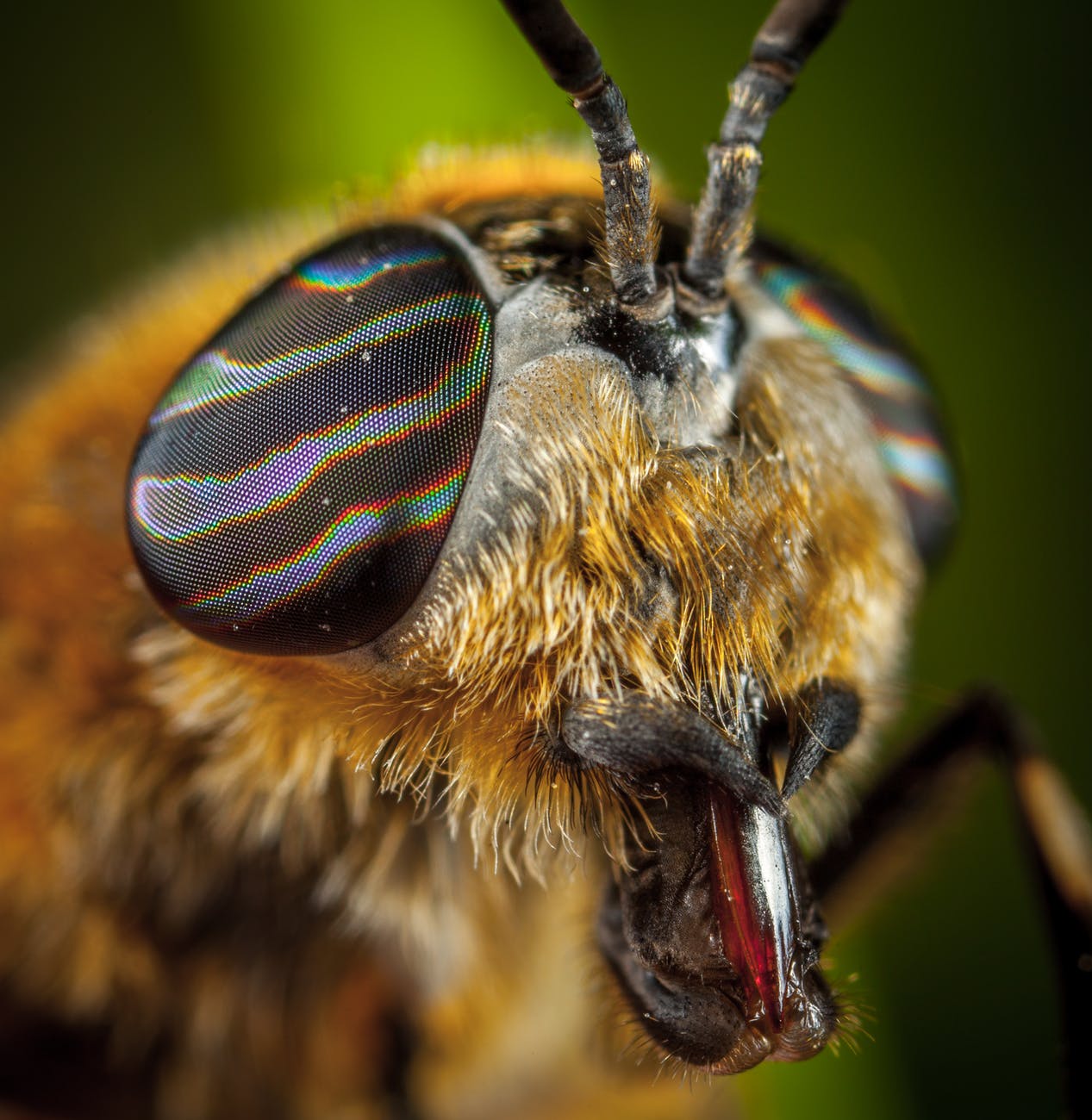
Did you ever think an animal or an insect might see your most basic colors, shapes, objects, differently than us humans? Well, take the mighty bee for example. In the most basic summary, bees depend on flower, and flowers depend on bees.
Even though there is a variety of pollination, like the wind (where the wind blows the pollen into spacious areas), butterfly, bat, hummingbird, wasp, and bird- bees pollinate 80% of the world’s plants, including 90 different food crops.
When we observe a bee on a vibrant flower, we usually see the bee diving its head into the flower, sipping on the sweet nectar, and maybe a few specs of yellow dust bouncing onto the hairy body. But what we don’t see is the special ultra-violet light in the flower.
For over centuries, plants have evolved to depend on insects, spreading their genes or replicated offspring. The plant species will be grown, thereon, in another region, not competing with its parent. In return, flowers treat the bees with a refreshing taste of nectar, as it collects the pollen unintentionally with its pollen sack. This relationship is called mutualism, in which both species get what they want, without hurting each other.
When the bee is lured to the flower, what they see is not a yellow springy daffodil, but an ultraviolet light spectrum. Bees, unsurprisingly, contribute advanced features that can make them see millions of pixels. The special pigments in the flower absorb the UV ray light, creating a ‘big bullseye’ in the center of the flower, which lures and tells them that the flower has sweet nectar. The ‘bulls-eye’ serves as an advantage for the small bees so they can find nectar more easily.
Additionally, the University of Brixel concluded a study that a bee can sense a flower’s electric field. When a bee flies from flower to flower, it creates a positive electric charge due to the friction in the air. Flower petals have a slightly negative charge. Then on, when the positively charged bee comes into contact with the negative petal, the pollen leaps onto the hairy bee. This connection also gives insight to the bee if another worker has taken any of the nectar.
Scientists today are still researching more into this sense of electric charge, and the flower-bee relationship between each other. But do we really have to scientifically prove that bees have superpowers?
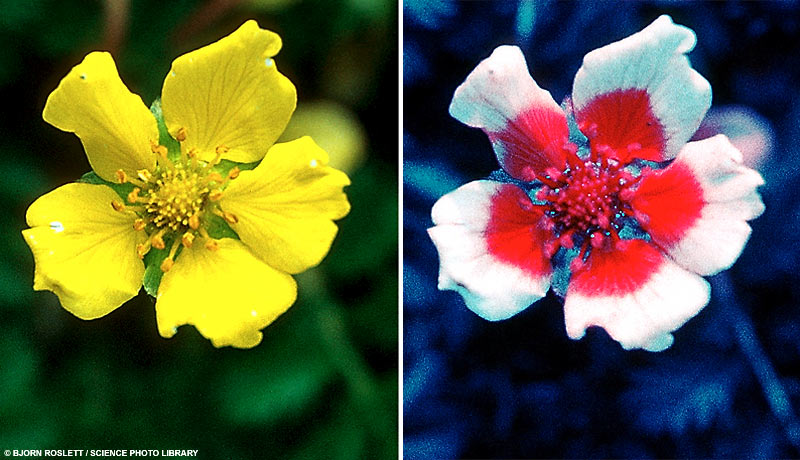
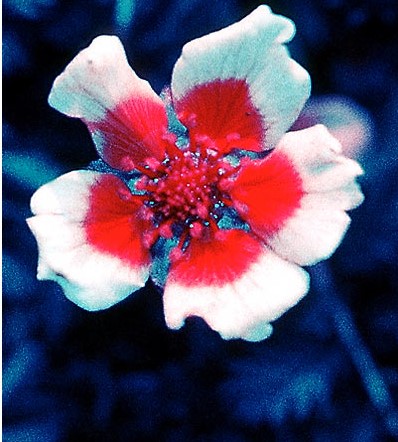

Ultraviolet photography approximates what bees see. Here a dandelion is half its “normal” yellow, half in the color bees might see.
Photo: ultravioletphotography.com
 Bee The Change