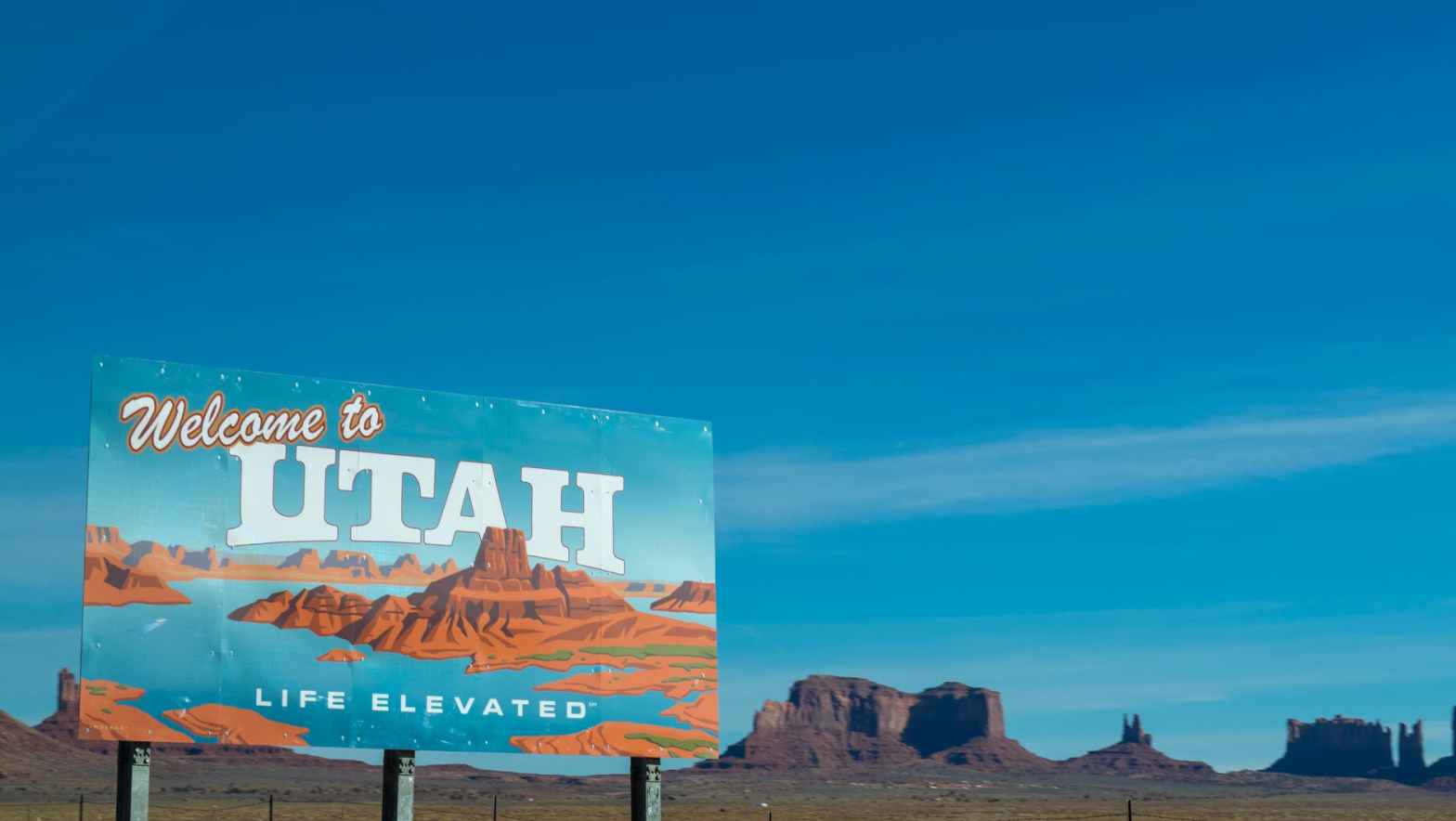
SALT LAKE CITY – Usually when we think of Utah, we imagine the Mississippi River, Zion National Park, and mountain ranges. But did you ever think of bees? From beehive symbols on street signs to several official emblems, it’s not surprising that Utah is known as the beehive state.
Since it became a territory in 1896, the beehive sign in its state seal and on its flag represent hard effort, staying thrifty, and cooperating. The state is home to more than 1000 different species of bees. This means 1 out of every 4 bee species lives in Utah, with the most diverse bee population in the entire country. The outcome is more than $1.3 million annually when it comes to honey.
With this idea in mind, Rep. Ashlee Matthews, D-West Jordan, aims to implement a three-year pilot program in Utah. This will not only encourage pollinator awareness, but providing a financial stimulus to motivate property owners into planting pollinator-friendly vegetation.
Because of its $390,000 fiscal note, HB223, which would set up the program under the Utah Department of Agriculture and Food, was disapproved by a legislative committee.
While the members of the House Natural Resources, Agriculture, and Environment Committee overall were optimistic of her proposal, the tight fiscal year, such as this one, needs the resource of alternative funding streams. Specifically, ones that don’t rely heavily on the general fund.
The committee voted to hold off the bill, but on Friday, Matthews proposed an alternative which didn’t rely on a new source of funding from the government. The measure passed unanimously.
The bill initiates taking $60,000 from the Southern Utah University in education funding. The bill also proposes that the Utah Department of Agriculture and Food will motivate pollinator-friendly plants into communities, but no greater than the cost of $100,000, for it will absorb as an agency.

The bill creates a 3-year pilot program to encourage greater bee habitats and populations back in Utah.
This includes:
- Workshop planting guides, or a public education campaign to raise awareness about pollinator habitats with public education efforts.
- Distribution of pollinator-friendly plants– Forbs (herb-type plants) and legumes to grow within the state in the ability to protect pollinators’ diversity.
- The support of local governments and nonprofit organizations projecting pollinator programs with departmental support.
- Establishing funding covering 25% of planting pollinator-friendly forbs and legumes on private or public land.
Educating these underrated, but vital species on a national scale is a step in the right direction. The University of Pittsburgh and Penn State University concluded in new research that one-third of managed honey bee colonies are dying each winter in the United States. This includes various other wild pollinator species as well, who are experiencing major declines in population. Moreover, the researchers also discovered that 80% of our total economic value is partly because of managed and wild pollinators.

The goal of Matthews’ bill would be able to educate Utah citizens about pollinators who are essential to our existence.
Matthews in her own experience as both a gardener and beekeeper gives credit for her prospering quarter-acre garden to the bees,
“The biggest impact on our harvest is the 20,000 bees from our hive,” she stated in a recent interview.
That being said, the grants would fund 25% of the costs for planting pollinating friendly forbs and legumes on private or public land.
Apart from that, to facilitate the program’s success through USU extension service offices scattered statewide, the state-run seed lab in Ephraim and support from multiple university research programs, including the cutting-edge bee lab at USU, would provide the infrastructure.
Making an impact starts with transforming individuals into a community, which is the first step in this prosperous plan. The effort and education will establish a new platform for the bees, giving them a voice on the issue.
 Bee The Change