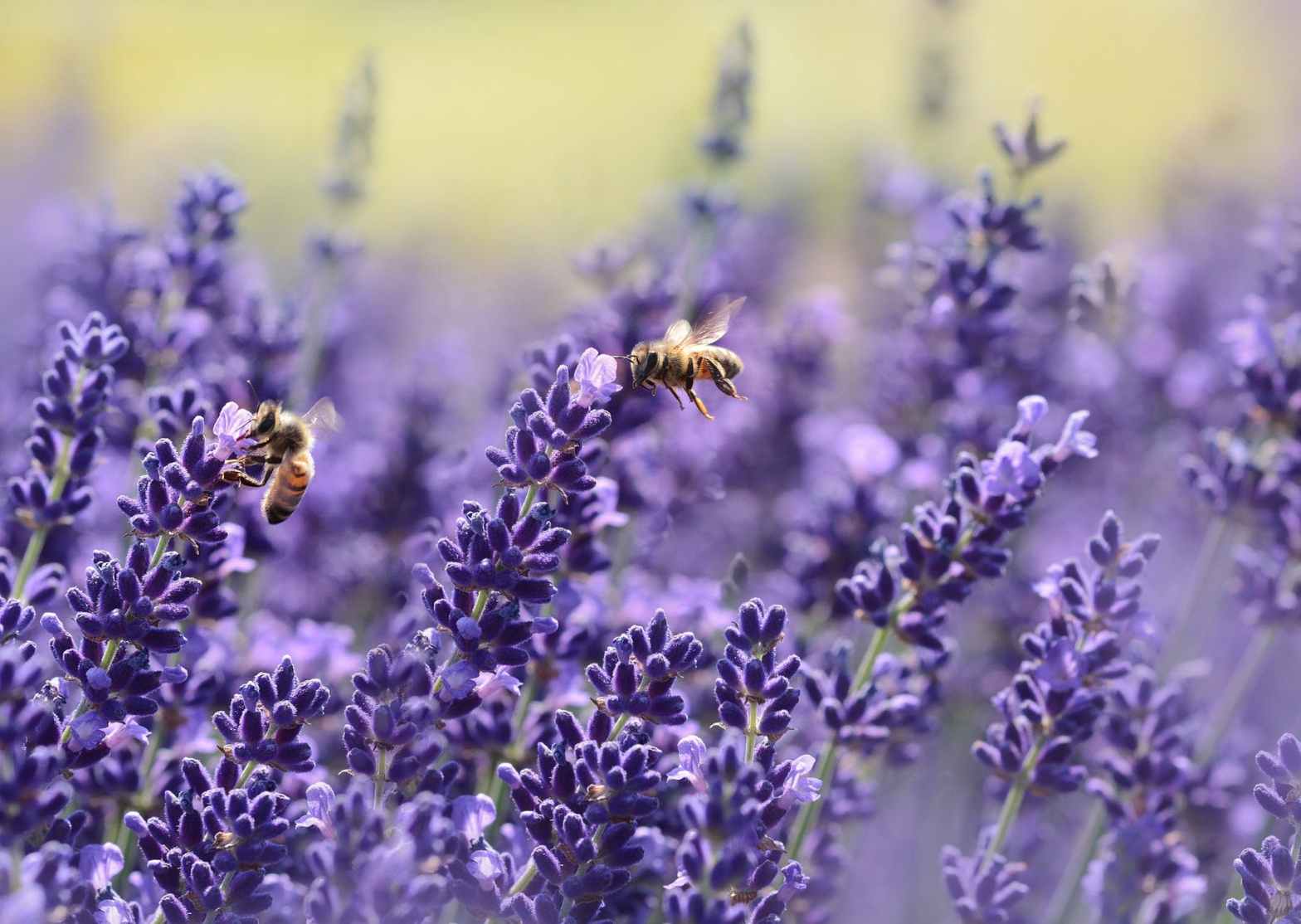

First off, lavender, as many claim, is a bee magnet. It’s essential for gardeners to plant lavender seeds or let wild lavender grow. The plant has both nectar and pollen to feed the bee.
Lavender blooms during the midsummer period, where bees are at their busiest season, so it is a huge benefit. Bees are more known to prefer both the English and French lavender hybrids. Scientists suggest that lavender is more popular towards bumblebees than honeybees, although both will still visit.
The University of Sussex concluded that bumblebees are prone to have longer “touches”. In contrast, they are better suited to collect nectar from the tubular shaped flowers, than honeybees. In other words, it takes less effort for a bumblebee to collect the nectar than a honeybee. The University also concluded that bees are most attracted to lavender and marjoram- out of 32 popular summer flowers. Hover flies, butterflies, and moths also counted as visitors to the lavender.
By planting lavender herbs in your backyard or in your garden, you can save your local bees, and support other pollinators too. Bumblebees and various wild bee species are threatened every day by extreme agriculture, pesticide, and habitat loss. More specifically, bee colonies have been at a risk due to parasites, viruses, and poor nutrition. This all traces back to the lack of wildflowers. Start planting today!
Check out our other posts for a lavender inspired lifestyle:
 Bee The Change