

We all heard of the Royal Queen of England. Nevertheless, have you heard of the Royal Queen of the hive? In every colony, there is typically one queen with thousands of worker bees and drones. Her job is crucial to the reproduction and ultimate fate of the hive.
She will lay 2,000 eggs a day which is equivalent to 43 eggs per second. Similar to the royal guards of England, the eggs will develop into honeybees that can support the colony and protect their queen. The queen bee, in exchange, will devote all of her time to the hive to reproduce more helpers. She will never make honey, touch a flower, or even eat honey. Since she is busy with “royal affairs”, she has attendants or worker bees that will feed, clean, and follow her around all day. She, in simple terms, is the biggest and most important, where she outlives all other bees in the hive, approximately up to 8 years. This queen bee has a lot to say.
Special diet
Unlike the worker bees (who are also female), the queen eats a unique substance called royal jelly, which no one else can touch. Royal jelly is a milk-like substance secreted by bees that provides nutrition to developing larvae. When the larvae are a few days old, the workers will feed them a primary diet of royal jelly until they select larvae who will be queen. Theron the worker bees will continue feeding the selected queen the substance. The royal jelly determines the fate of a fertilized egg- the main difference between worker and queen bees.
Royal Jelly can even benefit humans. It contains various nutrients which provide antioxidant and anti-inflammatory effects, reduces heart disease risk, and can regulate blood sugar by reducing oxidative stress.
Done with men in a day
This queen is also a player. During one period in her life, she will mate up with 30 drones. These drones are usually not from the same hive. Because the queen flies longer to a drone congregation area than drones, drones seldom mate with a virgin queen from the same colony. If a drone and a queen bee from the same hive mate, the resultant queen will have numerous vacant cells on a brood frame, resulting in a spotty brood pattern.
Nevertheless, the queen will mate with the drones in less than two days. This trip is the only time where the queen will travel out of the hive. She will leave the hive as a young virgin and mate at a drone congregation site, where thousands of males wait. She will then return to the hive after she has been fertilized and never mate again.
Power
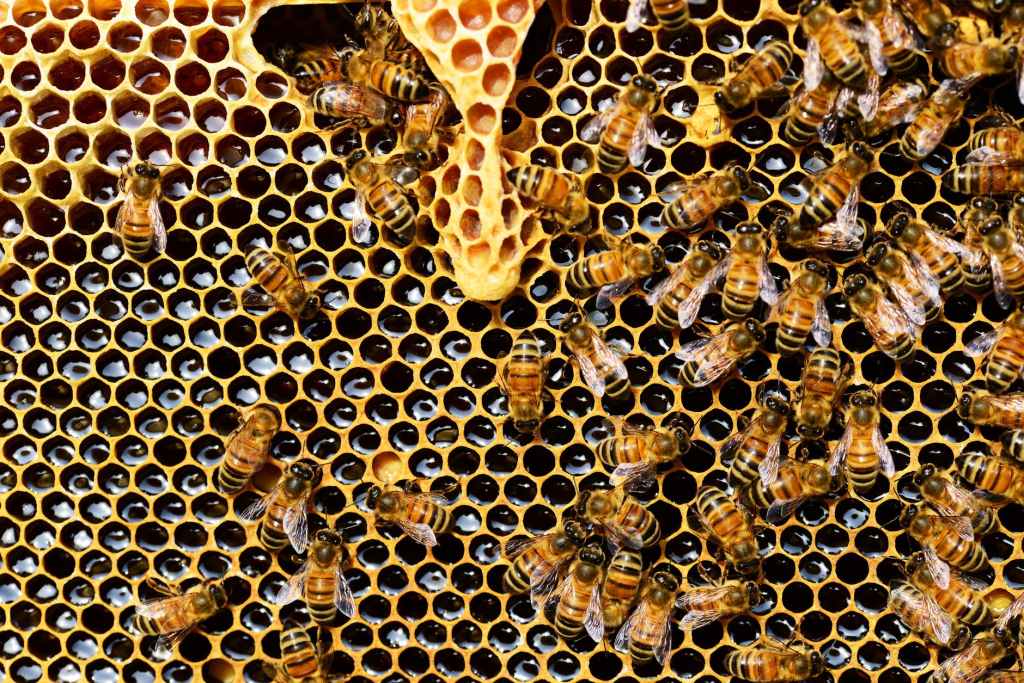
The queen has many powers in the “court” or colony. When laying eggs, she chooses whether she wants to lay a female or male egg. However, a majority of them turn out to be female, who are the worker bees. The queen’s fertilized eggs become female workers or future honeybee queens. The queen’s unfertilized eggs develop into male honeybees or drones. There are very few drones in the hive, such as 100 for every 1,000 worker bees.
The drones’ sole purpose is to mate with young virgin queens. Mostly, they like to eat all the foraged food the worker bees find. They do not help maintain the hive, as one would like to think.
In a lifetime, the queen can lay more than a million eggs. The pace at which the eggs are laid is impacted by weather, food availability, and her particular habits.
The Scent
Another power the queen has in the court is controlling the workers by releasing pheromones known as the queen’s scent. Pheromones are chemical fragrances produced by bees that have a strong influence on the hive, triggering physiological, social, and behavioral changes in the other bees. Scent is one of the most important aspects of beehive life. The queen of the beehive secretes a natural chemical fragrance through exocrine glands that gives each hive its own characteristic aroma. All of the worker bees in a hive rely on their queen to set the scent, which sets the tone for the hive.
What is the queen’s formula for developing her signature scent? Her mandibles contain her own unique blend of “perfume,” which is made up of a variety of natural ingredients.
This fragrance pervades the hive and becomes the dominant odor for all of the bees who live there. The worker bees can tell if the queen is changing if the aroma changes. For example, if she sick, all residents will be notified as soon as possible. The stronger a queen’s fragrance is, the more powerful she is thought to be by her hive mates. The more potent she is, the healthier the hive is assumed to be by all the bees in the hive.
The queen’s pheromones also make her sexually appealing to the drones she meets on her flight for mating. Her pheromone smell changes when she mates, letting the worker bees know she is no longer a virgin queen.
Drama in the Court
When a queen is not fertile anymore, or cannot produce enough eggs to satisfy the needs of the hive, the worker bees will kill her.
Her output will decline as her sperm storage diminishes as she grows older. A reduction in the quantity of pheromones she gives out alerts the colony to this shift. One of two things can happen when she is no longer valuable to the hive. Either a new queen will ascend to authority and entirely take over reproductive responsibilities, or the old queen bee will resign off the “throne”. Alternatively, the hive may murder the ailing queen bee in order to install a new one.
Balling is a non-violent yet deadly strategy used by worker bees to get rid of their queen. They ball their queen by forming a tight cluster around her. Worker bees will make a queen by feeding a fertilized egg royal jelly. The first to hatch finds her unborn sisters, and kills them so she can become the new, reigning queen. The heat generated by the throng causes the queen’s body to rise to extreme levels.
On another note, while one would think the Mother Bee would act ‘motherly’, the worker bees maintain, feed, and shelter the colony. The queen’s only role in fulfilling is laying eggs. The more worker bees there are, the more guarantee that the hive is in order.
She’s the Queen Bee- everyone wants to bee her.
Common Sense
 Bee The Change
Great article!
LikeLike
Thank you!
LikeLike